People usually talk about art in terms of taste, prices and provenance. But when a gallery runs into difficulties, a less glamorous question takes over. Who actually owns the work – and who gets it back?
Dr Ariel Sergio Davidoff is Founding Partner of Davidoff Law in Zurich. He gave the Swiss view in Citywealth’s 2026 art and activism update. Citywealth published the update on 25 November 2026. It also features lawyers in London and New York who specialise in art, insolvency and private wealth. The update looks at two pressures on the art world at once. One is cutbacks at commercial galleries. The other is the continuing debate over the restitution of the Benin Bronzes.
When the gallery cuts back
The commercial art market is going through a period of adjustment. In June 2026, Pace, one of the world’s largest galleries, cut its artist roster by around 30 per cent. Several long-established mid-sized galleries have also closed this year. Rising rents and fair and shipping costs squeeze the traditional gallery model. So do collectors who now prefer private sales and online viewing rooms. For artists, the consequences are very practical. They include works held on consignment, advances already paid and cancelled exhibitions. In the worst case, works end up stuck with an insolvent gallery.
The Swiss angle: ownership is not the same as possession
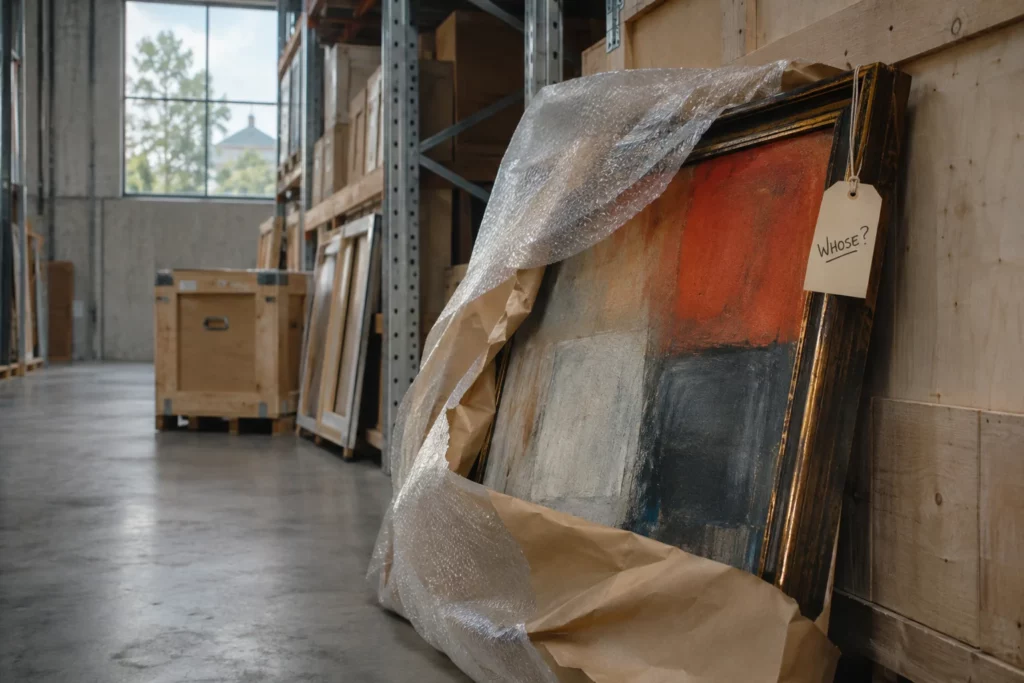
Under Swiss law, an artist generally remains the owner of works consigned to a gallery. Getting them back in a gallery insolvency is another matter. This is especially true where the works sit in third-party storage, such as a Freilager. A Freilager is a bonded warehouse under customs supervision. Its operator may assert a right of retention, even over objects that belong to third parties. Things get more delicate still if the gallery has sold a work but the artist has not received the proceeds. In the worst case, as Davidoff puts it, the artist ends up as «just another ordinary creditor». The buyer may face a fair share of problems too. That is why clear contracts on ownership, consignment, payment, termination and storage are essential.
Benin Bronzes: legally right, still criticised
The second theme is restitution. Who should receive returned objects? A state, a royal court, or descendant communities who also claim a voice? That question remains disputed. Campaigners continue to lobby museums, even after an unsuccessful court case. Swiss cultural property law does offer ways to return unlawfully transferred cultural objects. However, its reach over historical acquisitions, especially from the colonial period, remains narrow. Nor does the framework settle competing claims over who should receive an object or share in its future stewardship. For museums, Davidoff notes, this creates a tension between legal certainty and reputation. A decision may be fully defensible in law. Yet communities that feel unheard may still criticise it. Careful due diligence, transparent decision-making and genuine engagement with all stakeholders remain the best protection on both fronts.
What this means for artists, collectors and families
Artists should think about the end of a gallery relationship right at the start. What happens to consigned works, outstanding sales and commissions? And where does each work physically sit? Collectors should check title and the flow of payments before completing a purchase. They should also know exactly who holds a work and where. Families, family offices and foundations often hold art as part of a wider portfolio. For them, documentation, storage and provenance deserve the same attention as any other asset class.
Please note: the full Citywealth update also includes the views of the other contributors on gallery contracts, insolvency and restitution. You can read it here:
You can find further insights from Ariel Davidoff and Davidoff Law here:
- Due diligence principles in the art market: a Swiss point of view
- Jewellery and Alternative Assets: Provenance, Passion and Long-Term Value
- Cross-Border Complexity and Swiss Precision
- Privacy of Wealthy Families and Entrepreneurs: Key Threats
In short, a painting on a gallery wall is only as secure as the paperwork behind it. Whether the issue is an insolvent gallery or a contested restitution claim, the key questions are the same. Who owns the object? Who holds it? And who has a legitimate say in what happens to it next?